
Understanding CPU, RAM, and Storage: A Plain-Language Primer for Upgraders

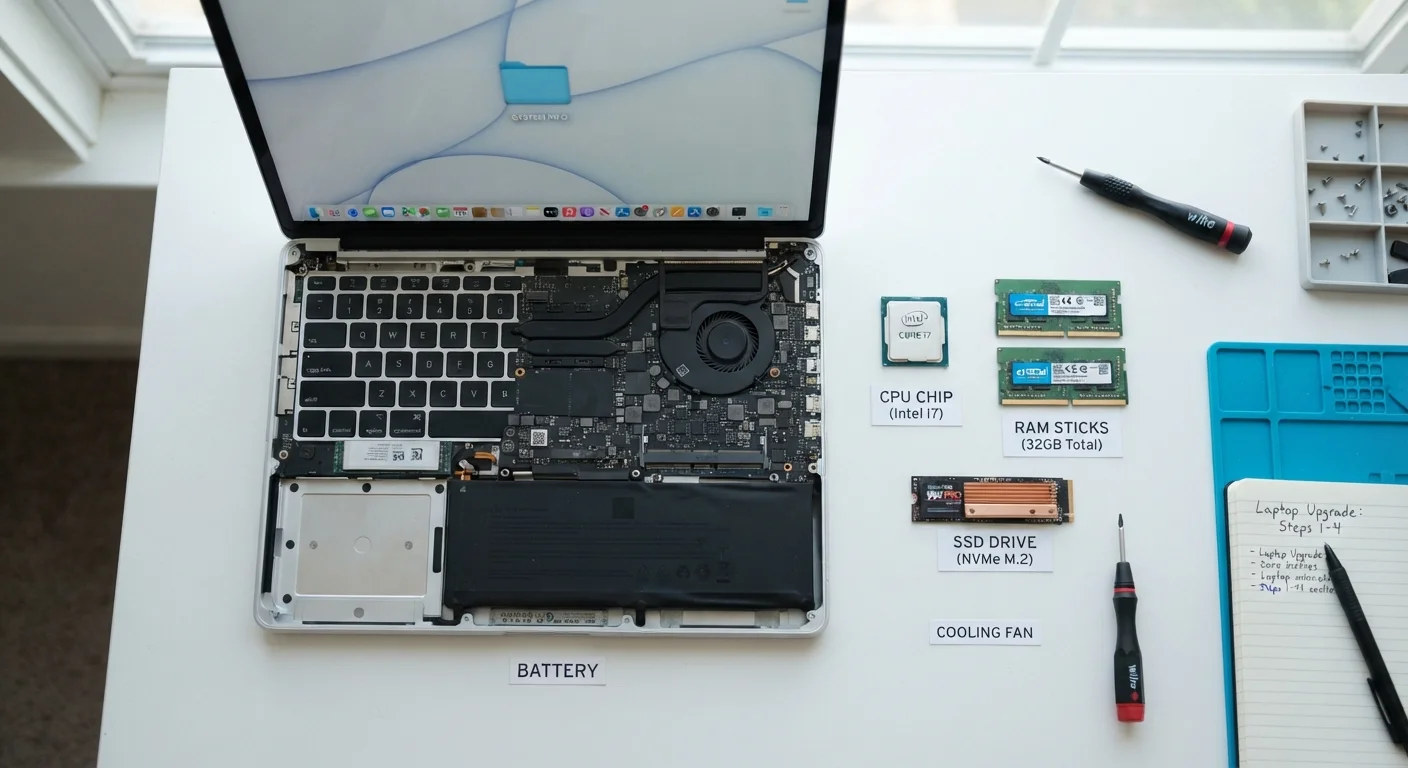
Key Takeaways
- The CPU processes instructions; more cores and higher clock speed generally mean faster multitasking.
- RAM holds data your computer is actively using - more RAM helps when juggling many open programs.
- Storage keeps your files permanently; SSDs are significantly faster than traditional hard drives.
- Upgrading the wrong component won't fix your slowdown - identifying the bottleneck first saves money.
- RAM and storage upgrades are often feasible on older machines; CPU upgrades usually require a new motherboard.
Start here
Why This Matters Before You Upgrade
Next
The CPU: Your Computer's Decision-Maker
Then
RAM: Short-Term Memory for Active Tasks
Continue
Storage: Where Everything Lives Long-Term
Bring it together
How the Three Work Together
Why This Matters Before You Upgrade
Most computer slowdowns have a specific cause - but without knowing what each core component actually does, it's easy to spend money on the wrong fix. Upgrading RAM when storage is the real bottleneck, or buying a new CPU when the machine just needs an SSD, are costly and avoidable mistakes.
This guide gives you the foundation to diagnose clearly and upgrade confidently. Once you understand what the CPU, RAM, and storage each contribute, you can match the right upgrade to the right problem. For a step-by-step walkthrough of the full upgrade process, see The Complete Guide to Computer Upgrades.
CPU (Central Processing Unit)
The main chip that executes program instructions. It performs the calculations and logic operations that make every software action possible.
RAM (Random Access Memory)
Temporary, fast-access memory that holds data for programs currently running. It clears completely when the computer powers off.
SSD (Solid-State Drive)
A type of storage that uses flash memory chips instead of spinning disks, resulting in much faster read and write speeds.
HDD (Hard Disk Drive)
A traditional storage device that uses spinning magnetic platters to store data. Slower than an SSD but often available in larger capacities for less cost.
Clock Speed
A measurement (in GHz) of how many processing cycles a CPU can complete per second. Higher clock speed generally means faster single-task performance.
Bottleneck
The component that is limiting overall system performance. Upgrading any other component won't help much until the bottleneck is addressed.
The CPU: Your Computer's Decision-Maker
The CPU - Central Processing Unit - is the chip that executes instructions. Every time you open a program, load a webpage, or save a file, the CPU is doing the underlying math and logic to make it happen.
Two specs matter most to everyday users:
- Clock speed (measured in GHz): How many cycles per second the chip can execute. A higher number generally means faster single-task performance.
- Core count: How many independent processing units the chip contains. More cores help when running several demanding tasks at once.
For most home users, a CPU upgrade is rarely the first answer. The CPU is often soldered to the motherboard in laptops and cannot be swapped. On desktops, compatibility constraints are significant. If you want to understand exactly what a processor does in practice, our plain-language processor explainer goes deeper.
Identify the Bottleneck Before Spending
Before any upgrade, observe exactly when and how your computer slows down. Use your operating system's built-in task manager or activity monitor to see which resource - CPU, memory, or disk - is consistently at or near 100% during slowdowns. That reading points directly to the component worth upgrading first.
RAM: Short-Term Memory for Active Tasks
RAM - Random Access Memory - is your computer's short-term workspace. When you open a browser, a spreadsheet, or a photo editor, the data those programs need is loaded into RAM so the CPU can access it quickly. When you close the program or shut down, that data disappears.
A machine with too little RAM starts using storage as a slow substitute - a process called paging or virtual memory - which causes noticeable sluggishness. Adding RAM eliminates this swap and restores snappy performance, but only up to the point where RAM was the constraint.
RAM is one of the more accessible upgrades on many desktops and some laptops, though many modern thin laptops have RAM soldered in place. Always check your specific model's specifications before purchasing.
For a broader look at how RAM, storage, and cache interact - concepts consumers frequently mix up - see our desktop specs glossary.
Storage: Where Everything Lives Long-Term
Storage is permanent memory - your operating system, applications, documents, photos, and videos all live here when the computer is off. Unlike RAM, storage retains data without power.
There are two main types in consumer computers:
- HDD (Hard Disk Drive): Uses spinning magnetic platters. Slower to read and write, but typically offers large capacity at lower cost.
- SSD (Solid-State Drive): Uses flash memory with no moving parts. Significantly faster, more durable, and now widely affordable.
Upgrading from an HDD to an SSD is often the single most impactful change you can make to an older computer. Boot times, application launches, and file transfers all improve substantially. Storage is also the component most consumers confuse with RAM - if you want to untangle those concepts thoroughly, our upgrade myths article addresses the most common mix-ups.
Check Compatibility Before Buying Storage
Not all SSDs fit all computers. Desktops may use 2.5-inch SATA drives or M.2 slots; laptops vary widely by model and generation. Before purchasing a replacement or additional drive, confirm your machine's interface type and physical form factor. Installing an incompatible drive is a common and avoidable mistake.
How the Three Work Together
Think of it this way: the CPU is the worker, RAM is the worker's desk, and storage is the filing cabinet. A fast worker (CPU) with a tiny desk (RAM) will constantly lose time retrieving things from the cabinet. A large desk doesn't help if the cabinet is so slow it takes forever to retrieve files. All three need to be reasonably balanced for the system to feel responsive.
When diagnosing a slow computer, observe when it slows down. Slowdowns during heavy multitasking or browser-tab overload point to RAM. Slow boot times and long app launches often indicate storage. Slowdowns under intensive computing tasks - video rendering, complex data processing - may involve the CPU.
Understanding this interplay helps you avoid the trap of upgrading what's visible rather than what's actually limiting performance. For a closer look at common upgrade misconceptions, our upgrade myths guide is the natural next read.