

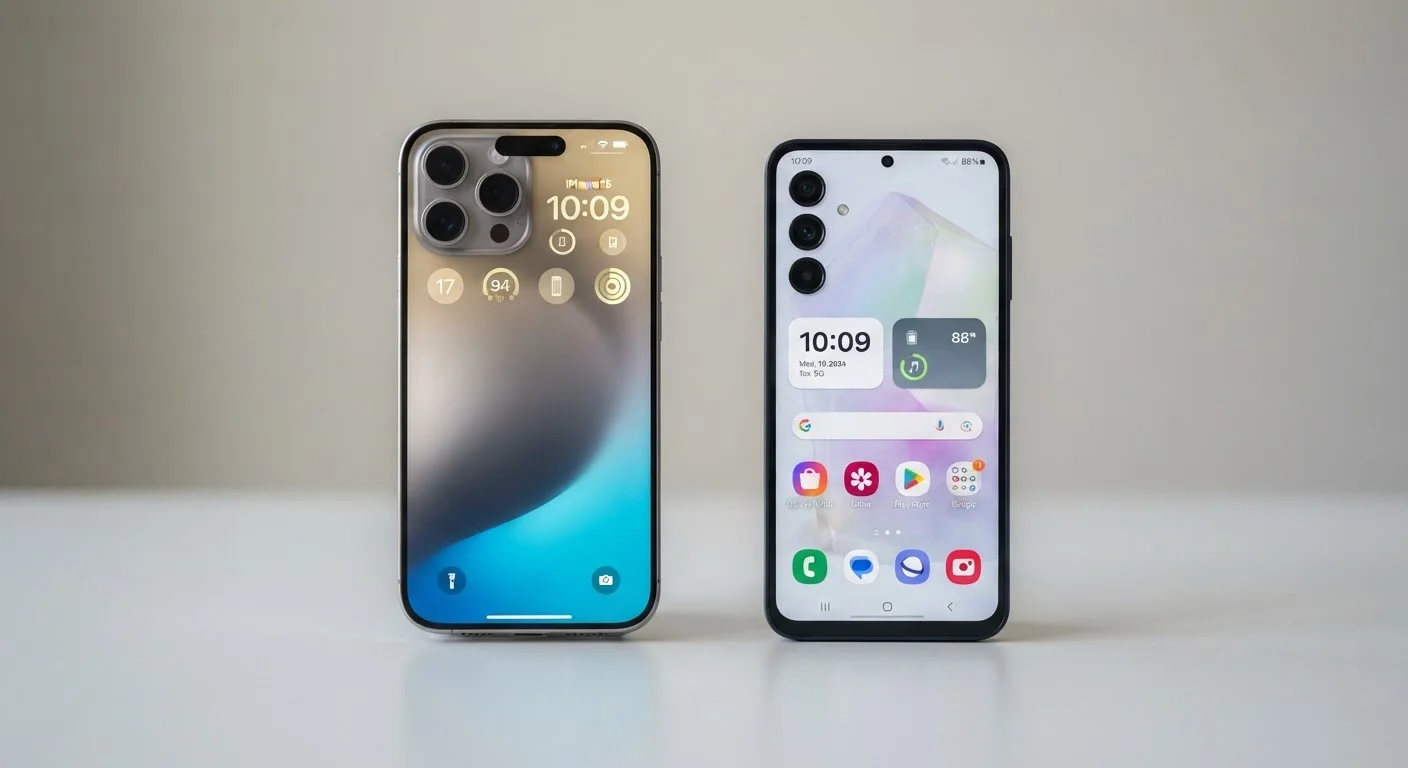
Key Takeaways
- Processor performance and thermal management remain the clearest real-world divides between tiers.
- Mid-range camera hardware has improved dramatically, but low-light and computational photography still favor flagships.
- Software update longevity is a critical long-term advantage that flagships consistently hold.
- Display quality differences are meaningful for content creators but largely negligible for casual users.
- Many flagship features — 5G, OLED screens, fast charging — now appear in mid-range devices.
- Your specific daily usage patterns should drive the tier decision more than specs alone.
Option A
Flagship Smartphones
The ceiling of consumer smartphone engineering.
Best for: Power users, mobile photographers, and anyone who wants the latest silicon, longest software support, and no hardware compromises.
Option B
Mid-Range Smartphones
The streamlined, value-driven everyday option.
Best for: Mainstream users who want reliable performance, capable cameras, and modern software without paying a premium-tier price.
If you rely on your phone for mobile photography and video
Flagship Smartphones
Flagship phones deliver superior computational photography, optical zoom, and low-light performance that mid-range hardware cannot fully replicate regardless of megapixel counts.
If your daily use is messaging, streaming, and social media
Mid-Range Smartphones
Modern mid-range chips handle everyday tasks without noticeable lag, and their displays and battery life are more than adequate for typical usage patterns.
If long-term software support is a priority
Flagship Smartphones
Flagship devices routinely receive five to seven years of OS and security updates, extending usable life well beyond most mid-range guarantees.
If you upgrade devices every two to three years on a budget
Mid-Range Smartphones
Mid-range phones offer a strong balance of capability and cost, meaning you can upgrade more frequently without the financial commitment of a flagship purchase.
If you use demanding apps, games, or multitask heavily
Flagship Smartphones
Top-tier chipsets handle sustained workloads with less throttling and more efficient thermal management, keeping performance consistent under pressure.
The Processor Gap: Where Performance Really Diverges
The most consequential difference between flagship and mid-range smartphones isn't the camera or the screen — it's the system-on-chip (SoC), the processor that governs everything from app speed to camera computation to battery efficiency.
Flagship-tier SoCs — the class that includes the chips found in top-tier Android devices and Apple's latest silicon — feature the most advanced CPU and GPU cores available at launch. They also integrate faster neural processing units (NPUs) that power AI-driven features like real-time photo enhancement, voice recognition, and on-device language processing.
Mid-range chips have improved substantially and handle everyday tasks — streaming, social media, navigation, messaging — without noticeable slowdowns. The gap shows up under sustained load: intensive gaming, 4K video recording, or heavy multitasking. Flagship processors manage heat more effectively, throttling performance less aggressively under pressure. For a fuller explanation of how chip specs translate to lived experience, see what smartphone specs actually mean for everyday performance.
| Criterion | Flagship | Mid-Range |
|---|---|---|
| Processor tier | Top-of-class SoC, latest fabrication node | Upper-mid SoC, one to two generations behind |
| Sustained performance | Strong under prolonged load | May throttle under sustained workloads |
| Camera low-light quality | Class-leading sensor and processing | Competent in good light; struggles in darkness |
| Optical telephoto zoom | Widely available across lineup | Limited to select upper mid-range models |
| Display peak brightness | 1,500–2,500+ nits typical | 600–1,000 nits typical |
| Water resistance rating | IP68 standard | IP54–IP67 common |
| OS update guarantee | 5–7 years (leading manufacturers) | 3–4 years typical |
| Price range (USD) | $800–$1,400+ | $250–$550 |
Camera Systems: More Than a Megapixel Count
Camera hardware is where marketing language most often obscures real differences. Megapixel counts rarely tell the full story — sensor size, aperture, optical image stabilization (OIS), and the underlying computational photography pipeline matter more.
Flagship phones typically pair larger image sensors with faster lenses and more sophisticated multi-frame processing. The result is stronger performance in challenging conditions: low light, high contrast, fast-moving subjects. Telephoto zoom — optical rather than digital — remains largely a flagship feature, though some upper mid-range devices now include modest periscope zoom lenses.
Mid-range cameras produce excellent results in well-lit environments and have largely closed the gap for social-media-quality shots. Video capabilities, however, still skew toward flagships: features like ProRes recording, advanced stabilization, and higher sustained frame rates at 4K resolution are generally reserved for premium hardware.
~70%
Mid-range share of global smartphone shipments
Industry analyst estimates consistently place mid-range devices ($150–$550) at roughly 70% of total global smartphone unit shipments.
5–7 years
Flagship OS update commitment (leading brands)
Several major Android OEMs and Apple now commit to five to seven years of software support for flagship-tier devices.
3–4×
Typical flagship-to-mid-range price multiple
Flagship devices commonly cost three to four times more than comparable mid-range options from the same manufacturer lineup.
Display and Build: Premium Materials, Diminishing Returns
Display panels are a legitimate differentiator — but the gap is narrowing. OLED screens, once exclusive to flagship devices, now appear across the mid-range tier. The distinctions that remain are more granular: peak brightness (measured in nits), variable refresh rate ranges (1Hz–120Hz adaptive vs. fixed 90Hz or 120Hz), and color accuracy calibration.
For typical use — browsing, video streaming, social apps — a well-tuned mid-range OLED panel is difficult to distinguish from a flagship display in everyday conditions. The difference becomes apparent under direct sunlight, where flagship screens pull ahead significantly in legibility, or during HDR content consumption where color volume and contrast depth are pushed to extremes.
Build materials tell a similar story. Flagship devices use premium-grade Gorilla Glass variants, titanium or aerospace aluminum frames, and IP68 water resistance ratings. Mid-range phones often carry IP54 or IP67 ratings and use polycarbonate or mid-grade aluminum. Durable? Yes. Equivalent? Not quite. Understanding which spec differences genuinely matter is covered in depth in our guide to reading smartphone spec sheets.
Software Longevity and the Hidden Cost of Mid-Range
One of the most underappreciated advantages of flagship smartphones is software update longevity. As of recent manufacturer commitments, several flagship Android lines now promise seven years of OS upgrades and security patches. Mid-range devices frequently receive three to four years of support, after which security vulnerabilities go unpatched and newer apps may stop functioning optimally.
When calculating true cost of ownership, a flagship held for five to six years may outlast two mid-range replacement cycles. That doesn't make flagships the right financial choice for everyone, but it shifts the comparison away from sticker price toward total value over time.
This is part of a broader framework for comparing phones across tiers and use cases — one that The Complete Guide to Comparing Smartphones Before You Commit covers end to end, including resale value and ecosystem lock-in considerations.
5G Is No Longer a Flagship Exclusive
5G connectivity, once a premium differentiator, is now standard across most mid-range smartphones sold in the US market. If 5G access is your primary upgrade motivation, you may not need to step up to a flagship tier at all. For a clear-eyed look at where 5G actually makes a difference day-to-day, see 4G LTE vs 5G in daily use.