

Key Takeaways
- Define your primary use cases before evaluating any hardware specifications.
- Software update commitments can extend or shorten a phone's useful lifespan significantly.
- Spec-sheet numbers across brands are not always measured or implemented the same way.
- Total cost of ownership includes accessories, repairs, and ecosystem services beyond purchase price.
- Resale value varies considerably by brand, model tier, and market timing.
Start With Your Use Case, Not the Spec Sheet
The most common mistake consumers make when comparing smartphones is leading with specifications rather than with their own needs. A 200-megapixel camera is irrelevant if you primarily shoot video in low light; a top-tier chipset offers little advantage if your daily workflow is messaging, browsing, and streaming.
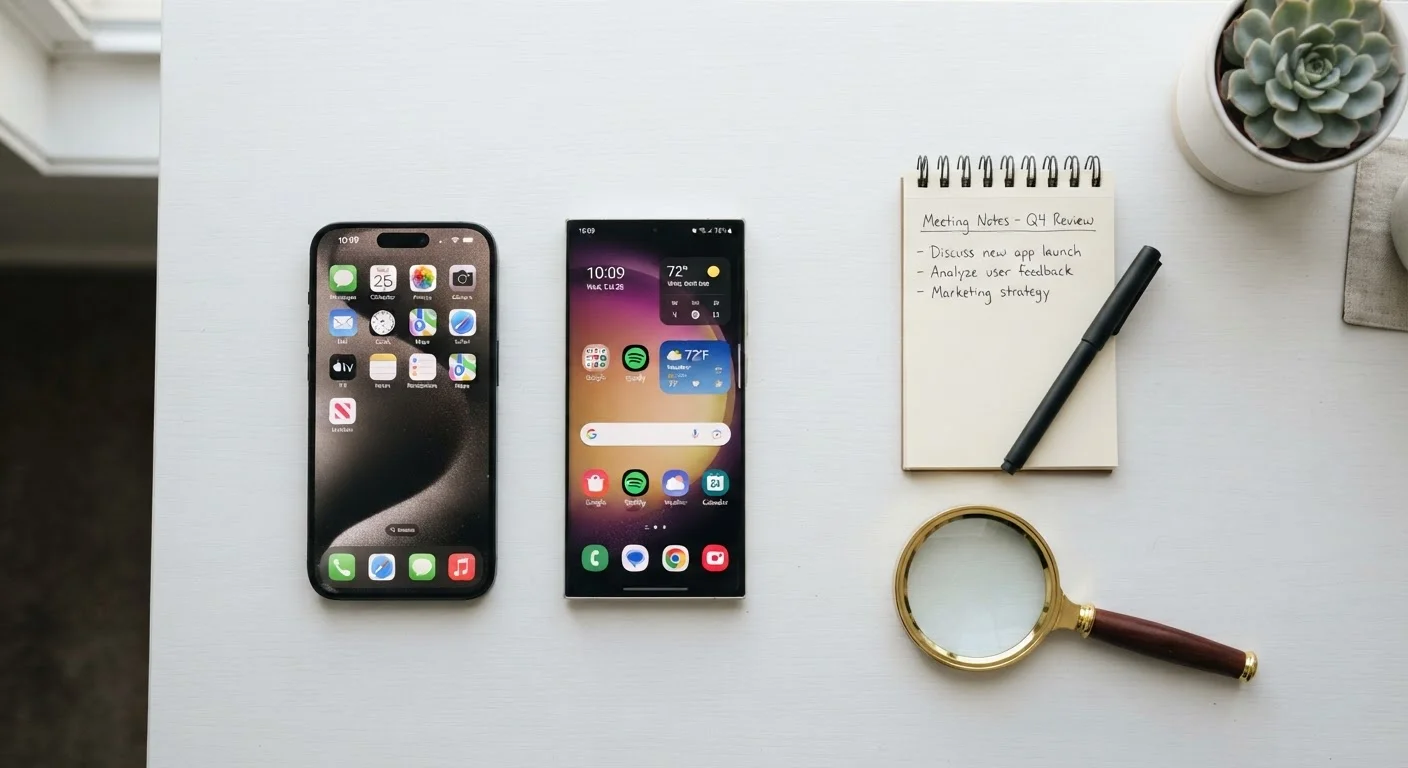
Before opening any comparison tool or spec sheet, write down the three to five tasks you perform most often on your phone. Common categories include mobile photography, gaming, navigation and travel, productivity (documents, email, video calls), and social media content creation. Your dominant use cases should become the filter through which every hardware and software feature is evaluated.
For new buyers who are still building their mental model of what phone features mean, our guide for first-time buyers explains the terminology and benchmarks in accessible terms. And if you are mid-cycle on a current device, running through a pre-upgrade checklist first can clarify whether a new purchase is actually warranted.
Anchor Your Search to a Specific Purpose
Write your top three use cases on paper before visiting any retailer or review site. This simple step creates a decision filter that prevents spec-sheet distraction and keeps your evaluation grounded in how you actually use a phone day to day.
The Hardware Dimensions That Actually Matter
Once use cases are clear, hardware evaluation becomes more targeted. The following dimensions are most consequential for typical consumers:
- Processor and RAM: The system-on-chip (SoC) — the integrated processor — determines sustained performance, AI processing speed, and thermal efficiency. Benchmark scores like Geekbench or AnTuTu provide directional comparisons, but real-world performance under sustained load is a better indicator of daily experience.
- Display: Panel type (OLED vs. LCD), refresh rate (60 Hz vs. 90/120 Hz), peak brightness (measured in nits), and color accuracy all affect usability. Higher refresh rates produce smoother scrolling; higher nit counts improve outdoor readability.
- Camera system: Megapixel count is a poor proxy for image quality. Sensor size, aperture, optical image stabilization (OIS), and the manufacturer's computational photography software collectively determine results. Examine sample images across multiple lighting conditions before drawing conclusions.
- Battery capacity and charging: Capacity in milliamp-hours (mAh) is only part of the story — software optimization and display efficiency heavily influence real-world screen-on time. Wired and wireless charging speeds vary widely across manufacturers.
- Build and durability: IP ratings (e.g., IP68 means dust-tight and water-resistant to 1.5 meters for 30 minutes under IEC standard 60529) indicate environmental resilience. Frame material and glass generations (such as Corning Gorilla Glass versions) affect drop survival odds.
7 years
OS and security update promise from some flagship manufacturers
Several leading Android manufacturers have publicly committed to seven years of OS and security updates on select flagship models as of their recent policy announcements.
~2 years
Average consumer smartphone replacement cycle in the US
Industry research has consistently placed the US smartphone replacement cycle at roughly two years, though actual replacement intervals have been lengthening in recent years.
Up to 50%
Potential value retained by flagship devices after two years
Resale data from secondary market platforms suggests flagship smartphones from strong-brand manufacturers can retain between 30% and 50% of original value at the two-year mark, depending on condition and market timing.
Software, Updates, and Long-Term Viability
Hardware depreciates, but software support determines how long a device remains secure and functional. Manufacturers vary significantly in their update commitments. Some vendors now promise multiple years of OS upgrades and security patches; others have historically provided far shorter support windows.
Before committing to a device, verify the manufacturer's published update policy. A phone with a shorter update window may become a security liability well before its hardware wears out. Security patches, in particular, address active vulnerabilities — devices that stop receiving them become progressively riskier to use for banking, authentication, or sensitive communications.
The operating system ecosystem also shapes your experience beyond updates. Android offers greater hardware variety and customization; iOS delivers tighter hardware-software integration and a historically consistent update schedule. Neither is objectively superior — the right choice depends on your existing devices, service preferences, and comfort with customization.
Update Policies Are Publicly Verifiable
Most major manufacturers publish their software support commitments on official support pages. Before purchasing, search the manufacturer's website for the specific model's update end-of-life date or guaranteed OS upgrade count. This information is typically available before a device is released.
Cross-Brand Comparison Pitfalls to Avoid
Comparing phones across manufacturers introduces analytical traps that can distort conclusions. Spec-sheet thinking — assuming that higher numbers always indicate better performance — is the most pervasive error.
Camera aperture values illustrate this well: a lower f-number (wider aperture) generally admits more light, but sensor size, pixel binning algorithms, and lens quality interact in ways that make direct f-number comparisons across brands unreliable. Similarly, manufacturers measure battery life under different test conditions, and storage read/write speeds depend on the flash memory standard used (UFS 3.1 vs. UFS 4.0, for example), not just total gigabytes.
When evaluating camera quality across brands, seek out blind comparison tests from reputable review outlets — ones where the device names are hidden until after you've judged the images. Your subjective response to color science and dynamic range processing often differs from what spec numbers predict.
Camera output is heavily shaped by computational photography tuning, which varies by manufacturer philosophy. Blind tests remove brand bias and reveal which processing style actually suits your preferences.
Check a device's sustained performance score — not just its peak benchmark — by looking for thermal throttling results in independent tests. A phone that drops significantly in performance after 10 minutes of load will feel slower in real gaming or video editing sessions than its headline numbers suggest.
Peak benchmark scores reflect a brief burst of performance. Sustained load tests reveal how the SoC and cooling system manage heat over time, which is more representative of demanding real-world tasks.
A more reliable approach is to use third-party testing from organizations that apply consistent methodologies across devices — covering display calibration, camera output across scenarios, sustained CPU performance under thermal load, and real-world battery drain. Pair that data with the 12-factor comparison checklist to ensure no dimension is overlooked.
Resale Value, Ecosystem Lock-In, and Total Cost
Purchase price is only one component of what a smartphone actually costs. Accessories (cases, chargers, cables), extended warranties, cloud storage subscriptions, and repair costs all factor into total cost of ownership over a two-to-three year hold period.
Resale value differs meaningfully by brand and model tier. Flagship devices from manufacturers with strong brand equity have historically retained value better than mid-range or budget alternatives, though this pattern is not guaranteed. If you upgrade on a two-year cycle, resale or trade-in return can materially offset the next device's cost.
Ecosystem lock-in deserves honest assessment. If you use a smartwatch, wireless earbuds, a tablet, or a laptop, integration depth with your smartphone OS may be a practical constraint. Some features — seamless handoff between devices, cross-device clipboard sharing, or unified messaging — only function within the same manufacturer's ecosystem. Switching ecosystems carries a one-time friction and re-purchase cost that should be weighed explicitly.
Trade-In Estimates Can Change at Any Time
Manufacturer and carrier trade-in values are promotional offers, not guaranteed prices. Values are subject to change and depend on the device's condition upon inspection. If resale value factors into your budget calculations, treat trade-in estimates conservatively and check current rates close to your actual purchase date.
Putting It All Together: A Decision Framework
A structured comparison process reduces the risk of post-purchase regret. Consider this sequence:
- List your use cases in priority order and assign relative weight to each hardware dimension accordingly.
- Set a realistic budget range that accounts for accessories and a protection plan, not just the device retail price.
- Shortlist two to three devices that appear in your price tier from reputable third-party review sources.
- Apply consistent criteria across all shortlisted devices using the structured 12-factor checklist rather than comparing whichever specs appear on each manufacturer's marketing page.
- Verify update commitments for each device before finalizing your choice.
- Assess ecosystem fit honestly — switching costs are real and often underestimated.
For broader context on smartphone ownership fundamentals, the Smartphone Basics hub covers core concepts that inform smarter buying and usage decisions at every level. The Smartphone Tips & Tricks hub is a useful resource once you've made your purchase and want to get the most from your new device.
“The best smartphone is the one that fits the way you actually live — not the one with the highest numbers on a spec sheet. Understanding your own usage patterns is the most underrated step in the buying process.”
— Smartphones Editorial Team, Consumer Technology Analysts