
Everything a Smartphone Spec Sheet Covers — and the Gaps It Deliberately Leaves Out

Key Takeaways
- Spec sheets are marketing instruments designed to highlight favorable numbers, not provide complete product truth.
- Key omitted details include software update commitments, thermal throttling behavior, and real-world battery endurance.
- Processor model numbers matter more than raw GHz figures, which can be misleading across different chip architectures.
- OS version and guaranteed update duration are among the most consequential specs never listed on the box.
- Cross-referencing spec sheets with independent benchmarks and hands-on reviews closes most of the knowledge gap.
What a Spec Sheet Is Actually Designed to Do
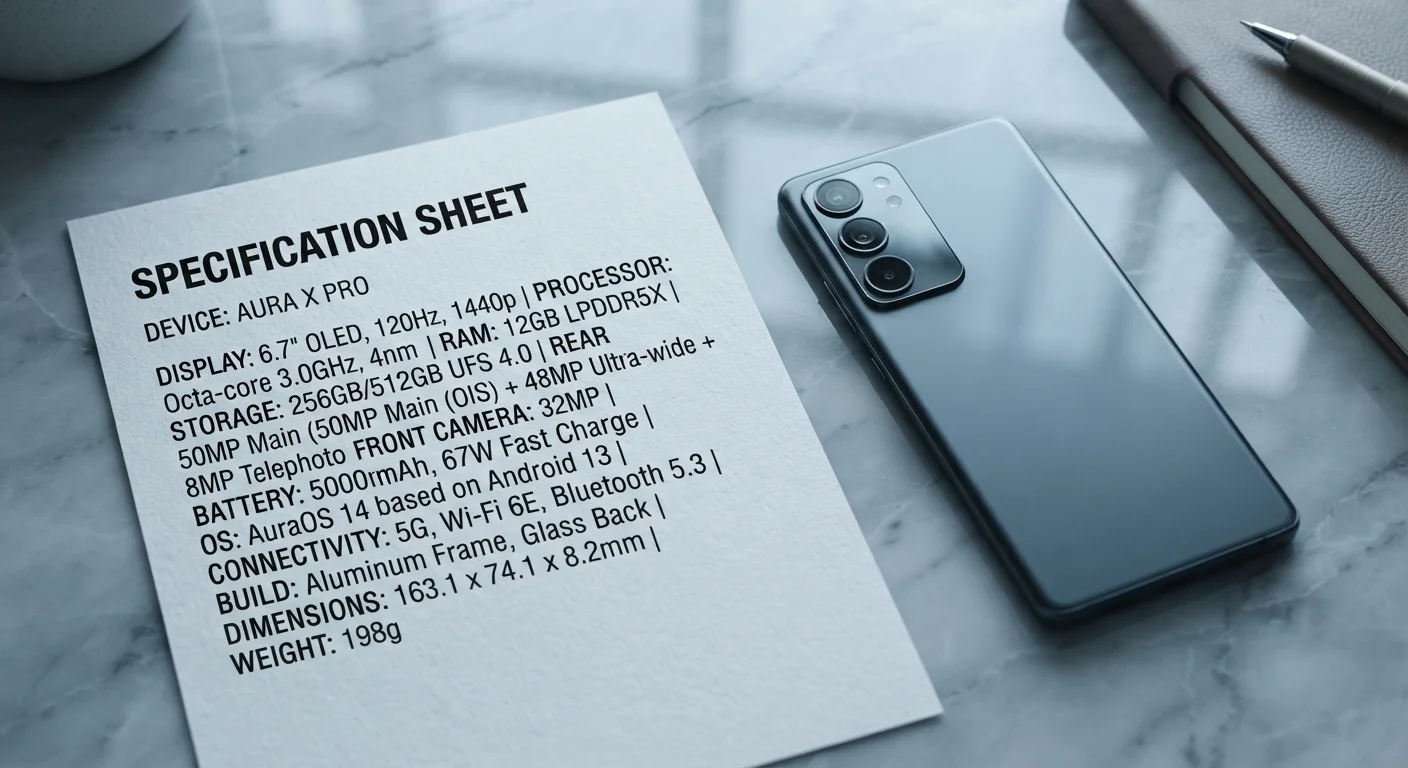
A smartphone spec sheet is a manufacturer-produced document. That single fact shapes everything you should do with it. It is compiled to satisfy regulatory disclosure requirements, enable carrier compatibility checks, and — most importantly — position a device favorably against competitors. It is not a neutral engineering document.
That doesn't make spec sheets useless. They provide a consistent vocabulary for comparison, and most of the figures they contain are verifiable. But reading one without understanding its purpose leads consumers to optimize for the wrong variables. As avoiding spec-sheet thinking pitfalls explains, matching numbers across brands is among the most common analytical errors buyers make.
When evaluating a processor listing, search the exact SoC model name followed by 'benchmark' before drawing any conclusions about performance — clock speed figures without architectural context are nearly useless for cross-device comparison.
Different chip architectures achieve vastly different performance and efficiency at the same GHz rating, making raw clock speed one of the most misleading figures on any spec sheet.
Ask the manufacturer directly — or check their support page — for the guaranteed number of OS updates and security patch years before finalizing a purchase decision.
Software longevity determines how long a device remains secure and app-compatible, often mattering more to total value than any hardware specification.
The Core Specs and What They Genuinely Measure
The figures that appear on virtually every spec sheet break down into a handful of categories. Understanding what each actually measures — rather than what it implies — is foundational to smarter decisions.
Processor (SoC)
The system-on-chip (SoC) is the single most consequential spec for day-to-day performance, app compatibility, and battery efficiency. Manufacturers list a model name and sometimes a clock speed in GHz. Clock speed alone is nearly meaningless across different chip architectures — a newer chip running at lower GHz will typically outperform an older chip running faster. Always identify the chip generation and cross-reference independent benchmark scores.
RAM and Storage
RAM figures (measured in GB) indicate how many apps can stay loaded simultaneously without being refreshed. More RAM generally improves multitasking, but the memory management behavior of the operating system matters equally. Internal storage speed — often omitted entirely — affects how quickly files load and apps install. The spec sheet rarely distinguishes between UFS 3.1 and UFS 4.0 storage standards, which carry meaningful real-world speed differences.
Display
Resolution and refresh rate are reliably listed. Less reliably disclosed: peak brightness (measured in nits), color accuracy (Delta E score), and whether the high refresh rate applies at all brightness levels or only under specific conditions.
Camera
Megapixel counts describe sensor resolution, not image quality. Sensor size, aperture, optical image stabilization (OIS), and the computational processing pipeline collectively determine photo output. None of these are fully captured by a megapixel number. For a deeper breakdown of what these numbers really mean, see smartphone specs decoded.
200+
Megapixels in current high-end sensors
Despite headline sensor resolutions exceeding 200MP on some flagship devices, output quality depends heavily on pixel-binning algorithms and computational processing, not resolution alone.
2–7 yrs
Range of OS update commitments across Android OEMs
Update guarantee periods vary widely across Android device manufacturers, a fact that never appears on retail spec sheets but significantly affects device longevity.
The Gaps Manufacturers Deliberately Leave Out
The omissions on a spec sheet are as structurally informative as the inclusions. Manufacturers have no incentive to disclose unflattering performance characteristics.
Thermal Throttling
Under sustained load — extended gaming, 4K video recording, or prolonged navigation — most processors reduce their clock speed to manage heat. This is called thermal throttling. No spec sheet discloses how aggressively a device throttles, or how quickly it recovers. Only sustained-load benchmark tools and hands-on testing reveal this.
Real-World Battery Endurance
Battery capacity is listed in milliamp-hours (mAh). This figure says nothing about actual screen-on time, which depends on the display technology, processor efficiency, software optimization, and the specific workloads a user runs. A smaller-capacity battery in a device with an efficient chip can outlast a larger battery in a less-optimized device.
Build and Durability Ratings
IP ratings for water and dust resistance are occasionally listed, but not always. Drop test performance, glass type, and frame material are frequently absent or buried in marketing copy rather than formal specs.
mAh Figures Don't Predict Battery Life
A higher milliamp-hour rating does not reliably predict longer screen-on time. Processor efficiency, display power consumption, and software optimization all interact to determine real-world battery endurance. Always consult standardized battery tests from independent reviewers before drawing conclusions from listed capacity alone.
Software and OS: The Missing Half of Performance
Operating system version at launch and the manufacturer's commitment to future updates are among the most consequential factors in a phone's long-term value — and they almost never appear on a spec sheet.
A device receiving security patches and OS upgrades for five or more years retains functionality, app compatibility, and protection against newly discovered vulnerabilities far longer than one abandoned after two years. This directly affects total cost of ownership in a way no hardware spec can offset.
Android device manufacturers vary substantially in their update commitments. Some now publish explicit guarantees; many do not. iOS update support duration is more predictable as a platform characteristic, though it still isn't listed on packaging. What specs actually mean for everyday performance covers how software optimization interacts with hardware figures to produce real-world results.
Android Update Policies Are Improving
Several major Android manufacturers have extended their stated update commitments in recent years, with some now matching or approaching the multi-year support windows historically associated with iOS. However, these commitments are made voluntarily and are not always reflected on product packaging or spec sheets — always verify directly with the manufacturer's support documentation.
How to Read a Spec Sheet Like an Analyst
Treating a spec sheet as a starting point rather than a conclusion is the foundational shift. Here is a practical framework:
- Identify the SoC and look it up independently. Find its benchmark tier, manufacturing process node (e.g., 4nm), and release date. Older chips in new-looking devices are a common value trap.
- Check the update policy separately. Visit the manufacturer's website or a reputable tech publication to confirm how many years of OS and security updates are committed.
- Cross-reference battery capacity with screen-on time tests. Independent reviewers running standardized battery tests are the most reliable source for real-world endurance figures.
- Treat camera specs as a starting hypothesis. Sample photos from trusted reviewers matter more than sensor resolution numbers.
- Note what is absent. No mention of storage standard, throttling behavior, or display peak brightness is itself diagnostic information.
For a structured approach to comparing multiple devices simultaneously, the complete smartphone comparison guide provides an end-to-end methodology. First-time buyers will also benefit from understanding what you're reading when comparing phones.
“The specification sheet has always been a sales tool first. The numbers it highlights are the ones that photograph well in a comparison table — not necessarily the ones that predict whether you'll be happy with the device in eighteen months.”
— Consumer Electronics Analysis Desk, Industry commentary on smartphone marketing practices