
5G, Wi-Fi 6, and Bluetooth 5: A Plain-Language Reference for Smartphone Connectivity

Why These Three Standards Matter Together
When you look at a smartphone spec sheet, connectivity labels like 5G, Wi-Fi 6, and Bluetooth 5 appear alongside processor speeds and camera megapixels — but they rarely come with explanations. Each standard governs a different kind of wireless communication, and understanding what each one actually does helps you evaluate whether a given phone fits your real-world needs.
This reference covers all three standards, what their specifications mean in practice, and when the differences between generations genuinely matter to everyday users. For a broader look at how mobile connection types interact, see how your phone actually connects.
5G: The Cellular Standard Explained
5G (fifth-generation cellular) is the mobile network standard that replaced 4G LTE as the baseline for new flagship and mid-range smartphones. It operates across multiple frequency bands that behave very differently from each other.
- Sub-6 GHz 5G uses frequencies below 6 gigahertz. It offers meaningfully faster speeds than 4G LTE and travels through buildings and over distances reasonably well. This is the flavor most users encounter in everyday coverage.
- mmWave 5G operates above 24 GHz, delivering peak theoretical speeds in the multi-gigabit range — but only within a very short range and with limited ability to penetrate walls. It is currently deployed in dense urban hotspots and specific venues rather than broad coverage areas.
For most consumers, the practical 5G experience depends heavily on their carrier's network build-out rather than the phone's hardware alone. Sub-6 GHz and mmWave behave very differently — a distinction carrier marketing tends to obscure. See also where 4G LTE and 5G differences actually show up for a side-by-side use-case comparison.
~10×
5G latency improvement over 4G LTE (theoretical target)
5G specifications target end-to-end latency as low as 1 ms under ideal conditions, compared to typical 4G LTE latency of 10–50 ms in real-world use.
4×
Bluetooth 5 range increase over Bluetooth 4.2
The Bluetooth SIG specification documents a maximum range increase from approximately 60 meters (BT 4.2) to 240 meters (BT 5) in open-air, line-of-sight scenarios.
37%
Wi-Fi 6 efficiency gain in dense device environments
The Wi-Fi Alliance has cited capacity and efficiency improvements of approximately 37% in congested environments compared to Wi-Fi 5, attributable to OFDMA and MU-MIMO enhancements.
Wi-Fi 6: What the Label Means for Your Phone
Wi-Fi 6 (technically IEEE 802.11ax) is the wireless local area network standard that succeeded Wi-Fi 5 (802.11ac). The Wi-Fi Alliance introduced numbered branding to make generation comparisons simpler for consumers.
Key improvements Wi-Fi 6 introduced over its predecessor:
- OFDMA (Orthogonal Frequency Division Multiple Access): Allows a router to communicate with multiple devices simultaneously within a single channel, reducing congestion in homes or offices with many connected devices.
- Target Wake Time (TWT): Lets devices negotiate scheduled communication windows with the router, which can reduce battery drain on smartphones and IoT accessories.
- Higher theoretical throughput: Maximum speeds around 9.6 Gbps across the network — though individual device speeds depend on signal conditions and network load.
Wi-Fi 6E extends these capabilities into the 6 GHz band, adding less-congested spectrum. A phone that supports Wi-Fi 6 will not automatically perform faster than a Wi-Fi 5 phone unless it is connected to a Wi-Fi 6 router in a congested environment. What you actually need for Wi-Fi 6 to make a difference covers the full picture. For definitions of related terms like SSID and WPA, see common Wi-Fi acronyms explained.
Bluetooth 5: Range, Speed, and Audio Profiles
Bluetooth 5 is the short-range wireless standard used by smartphones to connect to headphones, speakers, wearables, car audio systems, and accessories. It introduced several measurable improvements over Bluetooth 4.2:
- Range: Theoretical maximum range increased to 800 feet (approximately 240 meters) in open-air, line-of-sight conditions — roughly four times Bluetooth 4.2. Practical indoor range is shorter due to interference and walls.
- Data throughput: Doubled the raw data transfer speed of Bluetooth 4.2 in standard mode, enabling richer audio codecs and faster device pairing.
- Broadcast capacity: Can transmit data to multiple devices simultaneously, which underpins features like audio sharing to two pairs of wireless headphones at once.
Bluetooth 5.1 and 5.2 added direction-finding capabilities (used for precision location accessories) and LE Audio, which introduced the LC3 codec for improved audio quality at lower power consumption. Bluetooth 5.3 and 5.4 have since refined these features further. When comparing phones, confirming the specific sub-version matters if LE Audio or multi-stream audio is a priority.
OFDMA
Orthogonal Frequency Division Multiple Access. A method of dividing a wireless channel into smaller sub-channels so a router or base station can communicate with several devices at once, reducing wait times in busy environments.
LE Audio
A Bluetooth audio framework introduced with Bluetooth 5.2 that uses the LC3 codec. It enables better sound quality at lower data rates and supports multi-stream audio to multiple devices simultaneously.
mmWave
Millimeter wave. A high-frequency radio band (typically 24–100 GHz) used by some 5G deployments to deliver extremely fast speeds over very short distances, with limited ability to penetrate walls or travel far from the transmitter.
Target Wake Time (TWT)
A Wi-Fi 6 feature that lets devices schedule specific windows to send and receive data, allowing them to sleep between transmissions and conserve battery power.
Sub-6 GHz 5G
The most widely deployed flavor of 5G, operating on frequency bands below 6 GHz. It offers substantially better coverage and building penetration than mmWave, with real-world speeds typically in the 100–400 Mbps range depending on carrier and conditions.
LC3 Codec
Low Complexity Communication Codec. The audio compression format introduced with LE Audio in Bluetooth 5.2, designed to deliver improved audio quality compared to the older SBC codec while using less power.
For a broader reference covering other smartphone specification terms, see the common glossary of smartphone specs.
When the Differences Actually Matter — and When They Don't
Understanding a standard's spec ceiling is less useful than knowing the conditions under which an upgrade translates into a real experience change.
| Standard | Matters most when… | Matters less when… |
|---|---|---|
| 5G | Your carrier has deployed broad Sub-6 GHz coverage in your area, or you stream large files on mobile data regularly. | You spend most of your time on Wi-Fi, or live in an area with limited 5G rollout. |
| Wi-Fi 6 | Your home network has 10+ connected devices competing for bandwidth, or you use a Wi-Fi 6 router already. | You have a single-device household or a Wi-Fi 5 router — the phone's capability is irrelevant without a matching router. |
| Bluetooth 5 | You use wireless earbuds with LE Audio support, or need reliable connectivity across a larger space (e.g., a garage). | You primarily use Bluetooth for car audio or a single nearby speaker — Bluetooth 4.2 handles this adequately. |
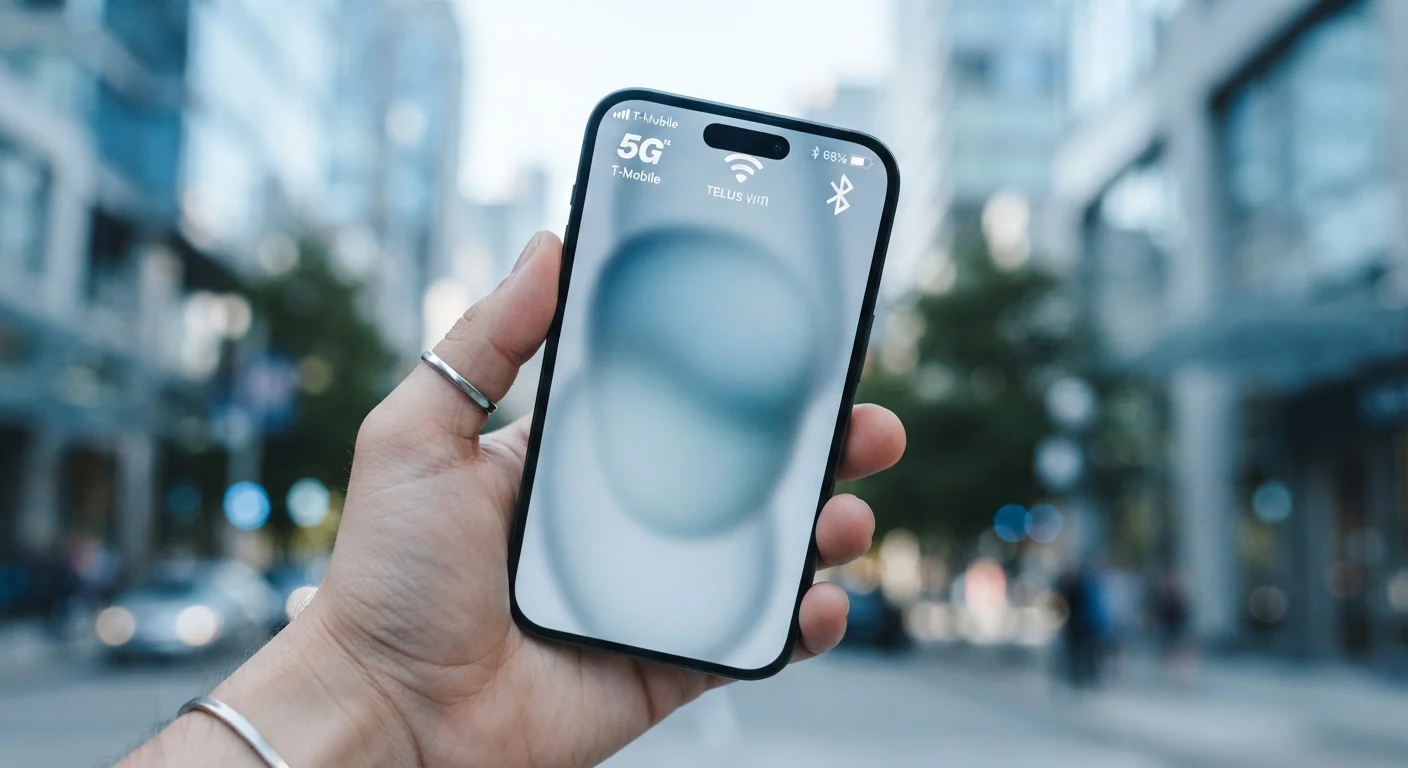
Checking which icons your phone displays for connection status can also clarify what network it is actively using. See what mobile data and Wi-Fi icons actually mean for a quick visual reference across Android and iOS.
Hardware Support Is Only Half the Equation
A phone listing Wi-Fi 6 or Bluetooth 5.2 in its specs only confirms the radio hardware is present — the surrounding infrastructure must match for benefits to be realized. A Wi-Fi 6 phone on a Wi-Fi 5 router operates at Wi-Fi 5 speeds. Similarly, LE Audio requires both the phone and the headphones to support Bluetooth 5.2 or later. Always check what your existing equipment supports before treating a connectivity spec as a standalone upgrade.