

Key Takeaways
- A smart home ecosystem connects devices so they respond to each other automatically or through one control point.
- Compatibility depends on shared protocols, platforms, or standards - not just brand.
- Matter is an emerging cross-industry standard designed to make devices work across different ecosystems.
- A hub or smart speaker often acts as the central coordinator for devices in a home.
- Mixing ecosystems is possible but can add complexity to setup and daily use.
Smart Home Ecosystem
A smart home ecosystem is a collection of connected devices - such as lights, thermostats, locks, and speakers - that communicate with each other through a shared platform or protocol. These devices can be controlled together through a single app, voice assistant, or automation rule. The goal is to make devices work in concert rather than as isolated gadgets.
Ecosystems may rely on cloud-based platforms, local hubs, or a combination of both to route commands between devices using wireless protocols like Wi-Fi, Zigbee, or Z-Wave.
What Makes a Smart Home an Ecosystem
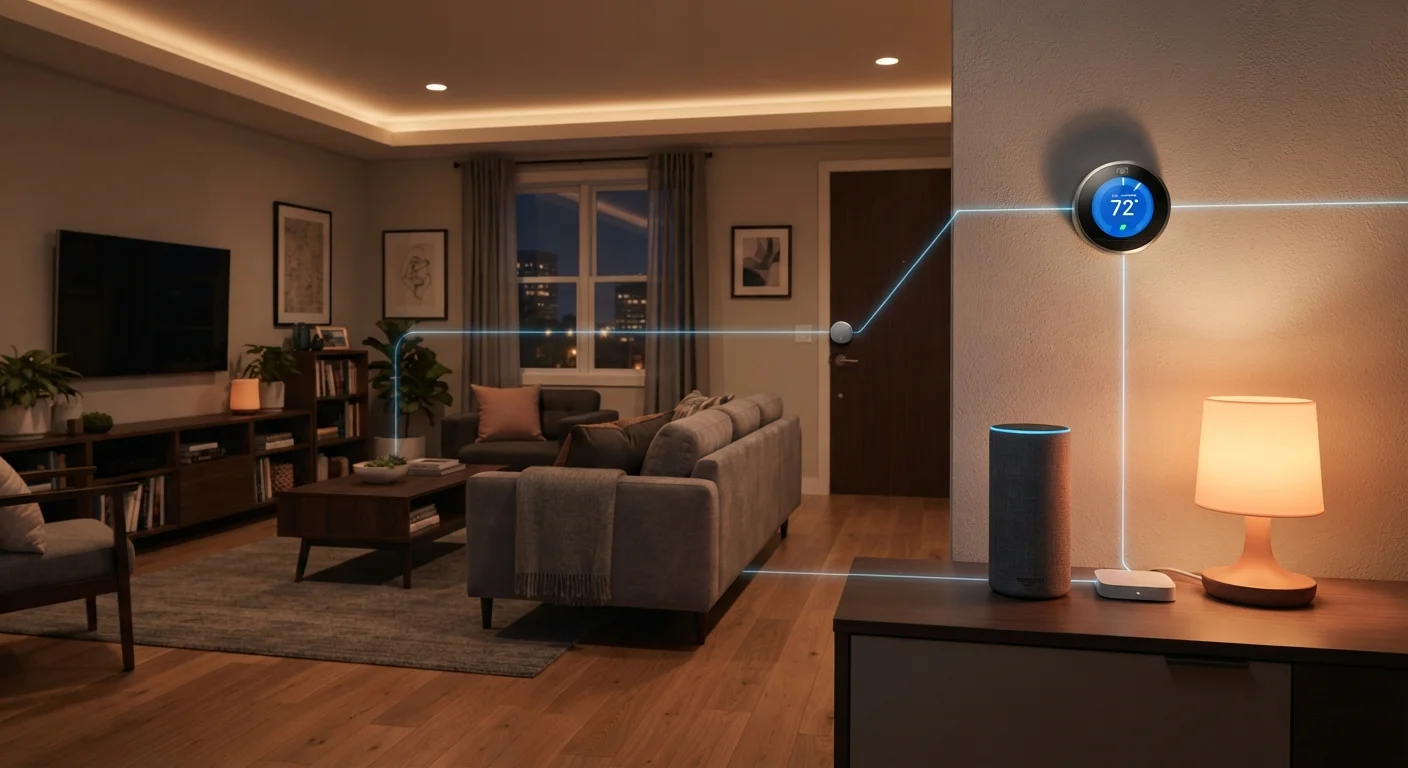
The word "ecosystem" in technology refers to a group of products and services that are designed to work together. In a smart home context, that means your thermostat can know when you've unlocked the front door, your lights can respond to motion detected by a sensor, and all of it can be managed from one app - or triggered automatically without any input at all.
What makes this possible is a combination of three things: a shared communication protocol (the language devices use), a platform or hub (the coordinator that routes commands), and cloud or local processing (where decisions get made). When these align, devices behave like a single coherent system. When they don't, you get smart devices that are smart only in isolation.
For a broader look at what each type of smart device actually does, see our guide to smart home device categories.
3+
Average connected devices per smart home
Industry research consistently finds that most smart home adopters own multiple device categories, from lighting to security, rather than a single device type.
Matter
Cross-platform standard now widely adopted
The Connectivity Standards Alliance reports that hundreds of device models across major brands have received Matter certification since the standard launched in 2022.
Protocols: The Language Devices Speak
Not every smart device communicates the same way. Some use Wi-Fi and connect directly to your router. Others use low-power radio protocols like Zigbee or Z-Wave, which are designed for battery-operated devices like door sensors and smart locks. Bluetooth is common for devices intended for close-range, direct pairing.
Each protocol has trade-offs in range, power consumption, reliability, and compatibility. A Zigbee bulb won't talk to a Z-Wave sensor without a hub that understands both. A Wi-Fi plug communicates easily with your router but draws more power and adds load to your home network.
The emerging Matter standard, backed by companies across the industry, aims to create a common language that devices can speak regardless of which platform they belong to. It doesn't replace existing protocols but adds a compatibility layer on top. Our plain-language guide to smart home protocols covers these options in detail.
Check Platform Compatibility Before You Buy
Before purchasing any smart device, confirm it lists your preferred platform - such as your voice assistant's ecosystem - as a supported integration. Look for devices that support Matter if you want flexibility to switch platforms later. Compatibility information is typically listed on the product page or in the device's app store listing.
Platforms and Hubs: Where Everything Comes Together
If protocols are the language, platforms are the translator and coordinator. Major smart home platforms - such as those offered by large consumer tech companies - provide the app interface, voice control integration, and automation logic that make an ecosystem feel unified. A hub, whether a standalone device or functionality built into a smart speaker, sits at the center of this and routes commands between devices.
Choosing a platform early matters because it shapes which devices you can add later. Some platforms support a wide range of third-party devices; others are more tightly curated. The right choice depends on the voice assistant you prefer, the devices you already own, and how much automation complexity you want.
Your home network is also foundational to all of this. A reliable, well-configured router keeps Wi-Fi devices responsive and reduces lag in automations. See our home networking coverage for guidance on keeping your connected home on solid footing.
Automations: Making Devices Work Together
The real value of an ecosystem emerges through automations - rules that connect one device's state to another's action. Common examples include lights that dim when a TV turns on, a thermostat that adjusts when the last person leaves home, or a door sensor that triggers an interior light at night.
Automations are set up through a platform's app using conditional logic: "if this happens, do that." The more compatible your devices are within a single ecosystem, the more seamlessly these rules operate. Mixing devices from different ecosystems can limit which automations are possible or require third-party tools to bridge them.
Security is worth keeping in mind as you expand your setup - each connected device is a potential entry point. Our article on smart home security walks through practical steps to protect your network without needing technical expertise.
It's also worth reading our piece on common smart home myths to separate realistic expectations from marketing promises before committing to a setup.