

Key Takeaways
- Keeping your phone at 100% charge for extended periods stresses lithium-ion cells.
- Frequent top-ups from high charge levels are more damaging than charging from low.
- Heat — not the charging cable — is the single biggest accelerant of battery degradation.
- Most modern phones include built-in tools to limit charge to 80% and protect long-term health.
- A battery at 20–80% charge experiences significantly less electrochemical stress than one at extremes.
Why Charging Habits Matter More Than You Think
Lithium-ion batteries — the chemistry powering virtually every modern smartphone — don't wear out all at once. They degrade charge cycle by charge cycle, and the conditions under which they charge and discharge determine how quickly that degradation happens. Most users assume their phone's battery health is mostly a function of age, but research into battery electrochemistry consistently points to charging behavior as a primary variable.
Understanding what actually harms a lithium-ion cell requires setting aside some widely repeated advice that turns out to be either outdated or simply wrong. The myths below are based on how older battery technologies behaved — or on misunderstandings of how modern battery management systems work.
For broader context on what else quietly drains and degrades your phone, see our guide to habits that degrade your phone faster than normal use.
Myth
You should always charge your phone to 100% to get the most out of it.
Fact
Regularly charging to 100% and keeping it there places the battery under sustained high-voltage stress, accelerating long-term degradation.
Lithium-ion cells operate most comfortably between roughly 20% and 80% state of charge. At full capacity, the voltage across each cell is at its peak, which increases the rate at which the electrolyte and electrode materials break down over time. Battery researchers refer to this as high-state-of-charge stress. A battery that spends most of its life near 80% will typically retain capacity longer than one routinely charged to 100% — even if both experience the same number of total charge cycles.
Myth
Overnight charging damages your battery because it overcharges it.
Fact
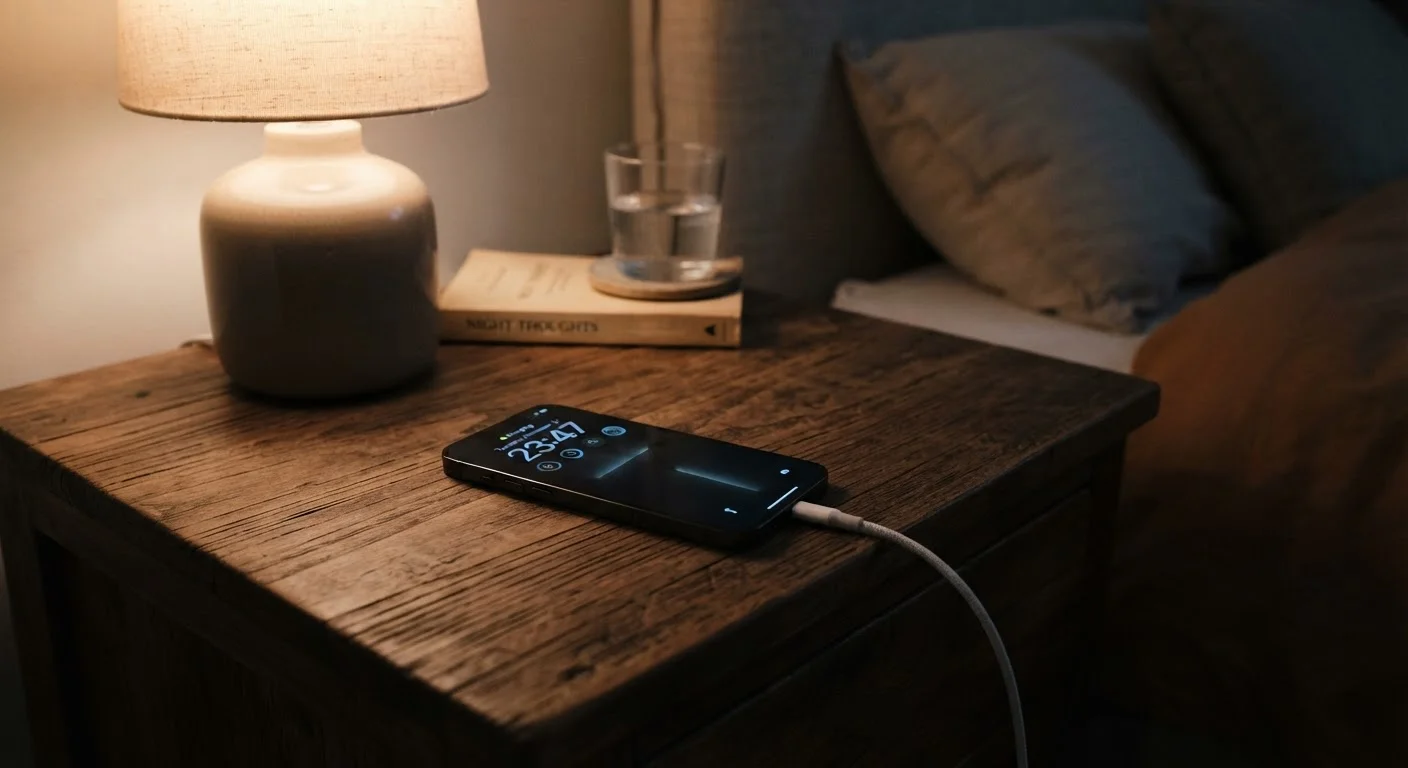
Modern smartphones stop drawing current once full — overcharging in the traditional sense doesn't occur, but staying at 100% for hours still causes stress.
Battery management circuits in today's phones automatically cut off charging current when the battery reaches 100%, so the cell is never actually overcharged. The real issue is sustained high-voltage dwell time: a phone sitting at 100% for six or seven hours while you sleep keeps the cells under elevated electrochemical stress even without active charging. Many phones now address this with optimized or scheduled charging, which delays the final charge until shortly before you typically wake up.
Myth
You should let your battery run all the way down before charging to keep it calibrated.
Fact
Deep discharges are harmful to lithium-ion cells; this advice applied to older nickel-cadmium batteries and does not translate to modern chemistry.
The practice of fully discharging before charging originated with NiCd batteries, which suffered from a memory effect — they could become conditioned to a reduced capacity if repeatedly charged from a partial state. Lithium-ion cells have no memory effect. Dropping below roughly 20% charge introduces its own form of stress, and repeatedly running a phone to near zero shortens the battery's cycle life more quickly than moderate partial charging does.
Myth
Fast charging is the main cause of battery degradation.
Fact
Heat generated during fast charging is the damaging factor, not the charging speed itself — and most devices manage thermal output carefully.
Fast charging protocols do generate more heat than slower charging, and heat is genuinely the leading driver of lithium-ion degradation. However, modern phones throttle fast charging based on battery temperature and manage thermal output through sophisticated power management hardware. Occasional fast charging is unlikely to cause measurable harm. The more significant risk comes from charging in already-hot environments — a warm car, direct sunlight, or under bedding — where heat cannot dissipate normally. For similar considerations applied to laptops, see keeping a laptop running well for longer.
Myth
Keeping your phone plugged in all day while using it at your desk is harmless.
Fact
Extended periods at 100% charge combined with the heat generated by active use create compounding stress on battery cells.
When a phone is both fully charged and being actively used — running apps, syncing data, or displaying content — it generates heat from processor activity at exactly the moment the battery is already under high-voltage stress. This combination accelerates degradation more than either condition alone. If you regularly use your phone plugged in for hours at a time, enabling an 80% charge cap or unplugging once charged reduces this compounding effect meaningfully.
Practical Steps to Preserve Battery Health
Armed with accurate information, a few straightforward adjustments can meaningfully extend the usable lifespan of your battery. The goal isn't perfection — it's reducing sustained exposure to the conditions that accelerate cell degradation.
~20%
Typical capacity loss after 500 full charge cycles
Battery research generally finds lithium-ion cells retain around 80% of original capacity after approximately 500 full charge cycles under normal conditions.
~2×
Faster degradation at elevated temperatures
Electrochemical studies indicate that sustained charging at elevated temperatures (above 40°C) can roughly double the rate of lithium-ion capacity loss compared to room temperature.
- Use your phone's built-in charge limit. Many Android devices and iPhones now offer an 80% charge cap or optimized charging mode. Enabling it costs you nothing in day-to-day use and reduces sustained high-voltage stress.
- Avoid charging in hot environments. Don't leave a charging phone on a car dashboard, under direct sunlight, or tucked under a pillow. Even moderate heat elevation during charging meaningfully accelerates degradation.
- Disconnect before leaving for the day. If you charge overnight, features like scheduled charging or optimized battery charging prevent the phone from sitting at 100% for hours — but unplugging when you wake up is equally effective.
- Partial charges are fine. Plugging in for 20 minutes while you get ready isn't damaging. Lithium-ion cells don't require full charge cycles to operate correctly.
If rapid drain is your primary frustration rather than long-term degradation, our breakdown of why your phone battery drains faster than it should covers the software and settings side of the equation.
Third-Party Chargers and Heat Risk
Using uncertified third-party charging accessories can bypass the thermal management and current regulation built into your phone's charging circuit. This may result in higher-than-intended heat generation during charging, which accelerates battery degradation. Look for accessories that carry recognized safety certifications and are compatible with your device's charging standard.