

Key Takeaways
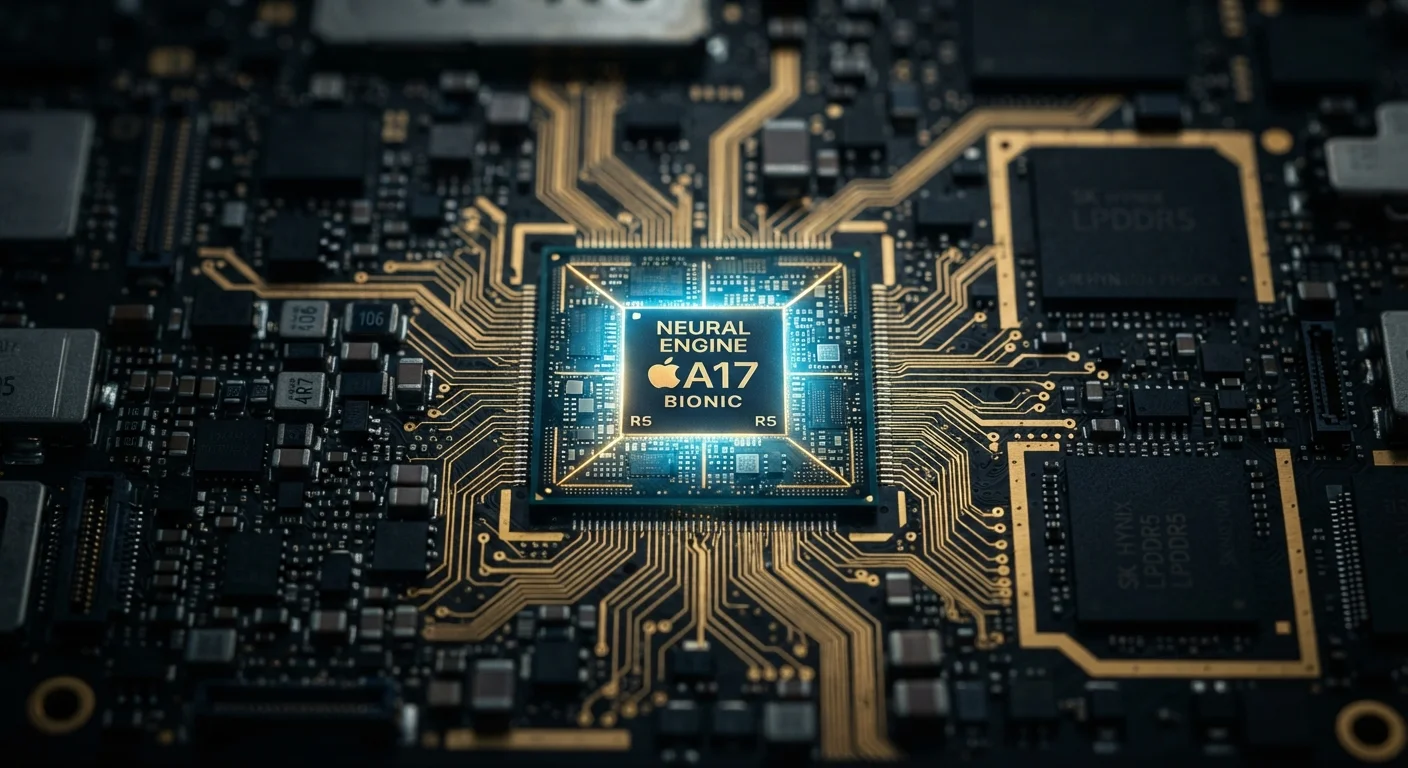
- A smartphone chipset bundles CPU, GPU, modem, and AI engine into a single chip.
- The neural processing unit (NPU) handles AI tasks like voice recognition and photo enhancement.
- Chipset efficiency directly affects battery life, not just raw speed.
- The modem inside the SoC determines your 4G or 5G cellular performance.
- Thermal design influences how long sustained performance can be maintained.
Mobile Chipset (SoC)
A mobile chipset — formally called a System on a Chip, or SoC — is a single piece of silicon that combines the core processing, graphics, cellular modem, memory controller, and several specialized engines of your smartphone into one compact unit. Unlike a desktop computer where those components are separate, a phone's SoC integrates everything to save space and reduce power consumption. Every time you open an app, take a photo, or stream video, the SoC is orchestrating those actions.
Modern SoCs are built on process nodes measured in nanometers (e.g., 3nm or 4nm); smaller numbers generally indicate greater power efficiency and transistor density, which can translate to better performance per watt.
More Than Just a 'Brain'
Marketing copy loves to call the processor the "brain" of a smartphone — which is accurate, but incomplete. A better analogy is a fully staffed operations center. Inside one chip the size of a fingernail, there are distinct teams handling different jobs: raw computation, graphics rendering, wireless communication, and artificial intelligence, all running in parallel.
This multi-role design is what separates a mobile SoC from a traditional PC processor. For a deeper look at how chipset specs appear on retail packaging alongside other numbers like RAM and display resolution, the smartphone specs decoder breaks down what those figures actually mean.
~16 billion
Transistors in a high-end mobile SoC
Modern flagship smartphone processors routinely integrate over 10–16 billion transistors on a single chip smaller than a fingernail, enabling simultaneous multi-engine operation.
5–8 cores
Typical CPU core count in a mobile SoC
Most contemporary mobile chips use a heterogeneous core architecture combining 2–4 high-performance cores with 4 efficiency cores to balance speed and battery life.
3nm
Leading-edge mobile process node size
Several flagship SoCs released in recent years have moved to 3nm or 4nm fabrication processes, improving performance-per-watt compared to older 7nm or 10nm designs.
The Key Engines Inside an SoC
Understanding what's packed into a single SoC clarifies why two phones with the same amount of RAM can perform very differently.
- CPU (Central Processing Unit): Handles general-purpose tasks — launching apps, running the OS, executing code. Modern mobile CPUs use a cluster architecture with high-performance cores for demanding tasks and efficiency cores for lighter work like checking notifications.
- GPU (Graphics Processing Unit): Manages everything you see on screen, from smooth scrolling to gaming frame rates to video playback. A capable GPU also accelerates some image processing tasks.
- NPU / Neural Engine: A dedicated processor for AI and machine learning workloads. This is what makes real-time photo enhancement, computational portrait modes, and voice recognition feel instant rather than sluggish.
- Modem: Controls cellular connectivity — 4G LTE or 5G. Integrated modems tend to be more power-efficient than external ones, which is why modem integration has become a competitive feature.
- ISP (Image Signal Processor): Bridges your camera sensor and software. It processes raw sensor data into a final image, handling noise reduction, color science, and HDR merging at the hardware level before software even touches the file.
“The convergence of CPU, GPU, neural engine, and modem onto a single die is one of the most consequential engineering achievements in consumer electronics — it's what makes a pocket-sized device capable of workloads that once required a workstation.”
— Jim Keller, Semiconductor architect and former chip design lead at multiple major processor companies
Why Efficiency Matters as Much as Speed
Benchmark numbers can mislead consumers into treating chipset performance as a single dimension. In practice, how efficiently a chip completes tasks matters as much as raw speed — especially for battery life and sustained performance under load.
When a chip runs hot, a mechanism called thermal throttling reduces clock speeds to protect the hardware. This is why a device can feel fast in a brief benchmark but slower during a long gaming session or extended video recording. Process node size (the nanometer figure used in chip descriptions) is one indicator of thermal efficiency: smaller nodes pack more transistors in less space and generally produce less heat per operation.
This efficiency relationship is also why chipset generation matters when thinking about a phone slowing down over time. Older SoCs aren't necessarily broken — they're simply being asked to run software designed with more headroom in mind. Our article on what actually makes phones slow down explores those dynamics in detail.
Look Beyond Clock Speed When Comparing Chips
Clock speed (measured in GHz) is only one dimension of chipset performance. Architectural efficiency, NPU capability, and process node size are equally important factors for real-world use. When comparing phones, consider the chipset generation as a whole rather than any single number. Our smartphone comparisons hub can help you put specs in context.
How the Chipset Shapes Your Daily Experience
Most chipset impact is invisible — and that's the point. A well-matched SoC means apps open without perceptible lag, the camera locks focus quickly, and the battery still has charge at the end of the day. When those things don't happen, the chipset is often a contributing factor.
For consumers evaluating a smartphone purchase, chipset generation and architectural efficiency are more meaningful long-term indicators than single-spec comparisons like clock speed alone. The guide to what smartphone specs mean for real-world performance expands on how to weigh SoC capability alongside other factors like display and camera hardware.
Understanding the processor inside your phone reframes how you think about every feature — from camera quality to 5G reliability to how long your phone will stay usable. The chip isn't just a component; it's the foundation everything else is built on.